What Builders & Engineers Need to Know
Metal buildings and industrial structures depend on one simple idea: keep the frame stable when the real world pushes back. Wind loads, seismic motion, wide spans, equipment vibration — it all has to be managed through some form of cross bracing.
Today, two solutions dominate that job: brace rods (rigid members) and structural cables (tension-only systems). On paper, they often look interchangeable. In the field, they behave very differently.
For metal frame buildings, utilities, commercial infrastructure, and industrial environments, those differences matter — not just for engineering, but for schedule, cost, and long-term performance.
Two Solutions, One Goal — But Not the Same System
If you’re new to the terminology, here’s how most people define these systems:
Brace Rods (a.k.a. Bracing Rods)
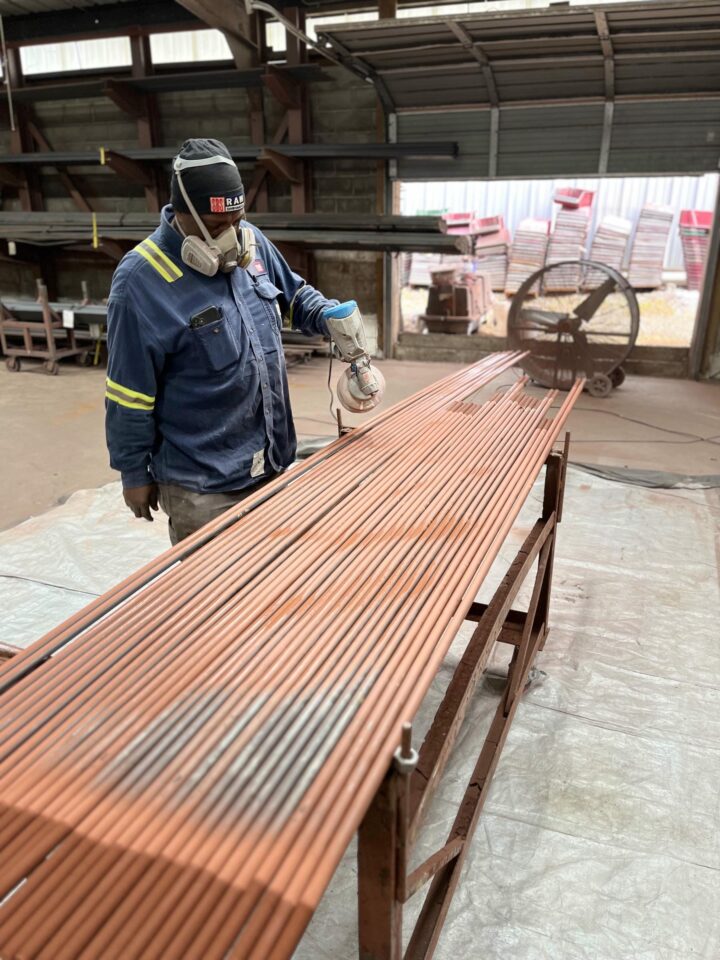
Rigid steel members that tie structural components together. They handle tension and compression, resist wind and weather forces, and create predictable geometry between frames.
Structural Cable (a.k.a. Speed Brace Cable, X Bracing, Structural Cable Systems)
Flexible tension members that brace a structure by pulling components together. Cables can’t resist compression — they go slack when pushed — but they’re fast to install and adaptable across large spans.
Engineers can spec both. Installers can use both. But they don’t solve the exact same problem the exact same way.
Brace Rods vs. Structural Cable: Key Differences at a Glance
|
Most shops will tell you the same thing: brace rods can replace cable in many situations; cable cannot always replace rods.
That’s not a marketing line — that’s physics.
Where Each System Shows Up in the Real World
Brace rods are particularly common in:
- metal buildings
- utility infrastructure and substations
- industrial structures and mechanical systems
- municipal and commercial construction
Structural cable tends to show up in:
- seismic zones
- very wide spans (hangars, warehouses, arenas)
- jobs prioritizing installation speed over rigidity
Same family of problems. Different jobsite priorities.
Why the Difference Matters: What the Building Actually Experiences
If all structures lived in ideal loading conditions, it wouldn’t matter much. But in the real world, they see:
- wind shear
- uplift
- compression
- vibration
- fatigue
- dynamic loads
- long-term tension changes
- thermal expansion
- maintenance neglect
In the Southeast — where hurricanes and storm systems are part of the design conversation — brace rods offer a major advantage:
They hold geometry under compressive forces.
Cables simply can’t do that. They’re tension-only by design.
On the other hand, in seismic zones, flexibility is an asset. Cable systems absorb motion that rods cannot, and they do it cleanly.
There’s no “one size fits all.” It’s about choosing the right tool for the environment the building actually lives in.
Cost, Availability, and the Metal Building Boom
There’s another layer to the story that engineers sometimes skip: project economics and supply chain.
Right now, the metal building market is exploding across the Southeast and Gulf Coast. More buildings, more utilities, more mechanical systems — and far more schedule pressure.
That pressure changes decisions.
One interesting shift from our own vantage point:
Many metal building software packages now default to brace rods, not cable. That isn’t accidental. It reflects demand.
We’ve also seen customers move away from cable for practical reasons:
- rods are easier to source
- rods eliminate material waste
- rods arrive in exact lengths and quantities
- rods drop into assemblies faster when tolerances are tight
- rods don’t require fittings or tensioning hardware
And then there’s the emergency side of the work — the calls that come after a job realizes they’re missing two critical rods needed for inspection. We’ve supplied brace rods in as little as three days, and in rare cases, the same day when everything lined up.
Good luck pulling that off with cable assemblies and fittings.
The Custom Fabrication Angle
Here’s another reason brace rods are winning attention: they’re easy to customize.
The majority of brace rods we see are modified in at least one of these dimensions:
- length
- diameter
- thread length
- coatings (galvanizing, paint, etc.)
- ASTM standards
- hardware pairing
- left-hand threads for turnbuckles
- plate washers (we make these in-house via ironworker)
For many metal building manufacturers, brace rods are recurring SKUs, not one-offs. They’re custom, but not exotic — predictable, repeatable, and buildable in volume.
Compare that to cable:
- sold by the spool
- cut in the field
- excess becomes waste
- fittings add cost
- tensioning adds time
- assembly adds failure points
Better yet, rods don’t need field improvisation. They arrive ready to go.
But Let’s Be Clear: This Isn’t Anti-Cable
Cables aren’t the villain. They’re the right solution in many seismic, long-span, or specialty environments.
But for the core audience we serve most — utilities, metal buildings, commercial structures, industrial infrastructure — brace rods are often the better fit for how these buildings actually get built, inspected, and maintained.
And that’s before we talk about:
- metal building cost
- maintenance windows
- replacement cycles
- insurance requirements
- post-event performance
Because what passes inspection on day one isn’t always what survives a Category 4 storm or 15 years of vibration from a transformer yard.
Where SBS Fits Into This Conversation
At Southeastern Bolt & Screw, we don’t manufacture structural cable — and that’s not a gap. It’s a choice.
We serve the industries where bracing rods, anchor bolts, eye bolts, u-bolts, and structural hardware solve real problems and keep real projects on schedule.
Our advantages are straightforward:
- speed: we can deliver brace rods in days, not months
- custom fabrication: one-offs, short runs, or recurring batches
- hardware ecosystem: washers, nuts, plate washers, coatings
- availability: we carry the materials, we run the machines
- regional logistics: we can geofence a five-state footprint for time-sensitive jobs
We’re not selling shortcuts. We’re solving timelines.
Closing It Out
If you’re designing, sourcing, or replacing bracing in a metal building, utility installation, or industrial structure, the real question isn’t “cable or rod?”
It’s:
“What loading condition is the structure actually going to see, and what’s the smartest way to brace against it?”
If the answer is brace rods, and you need them fabricated to spec — whether in three days or three weeks — we’re the people you call.
Have Questions About the Right Bracing System for Your Project?
If you’re evaluating brace rods for a metal building, utility installation, or industrial structure — or you’re replacing bracing on an existing system — we’re happy to talk through the requirements, the constraints, and the realities of getting parts to the field on schedule.
We can review drawings, specs, materials, timelines, and coating requirements, and we’ll tell you quickly whether brace rods are the right solution for the environment your structure is going to live in.
No pressure, no sales pitch — just practical guidance from people who build these components every day.
Reach out to us and we’ll help you find the smartest path forward.